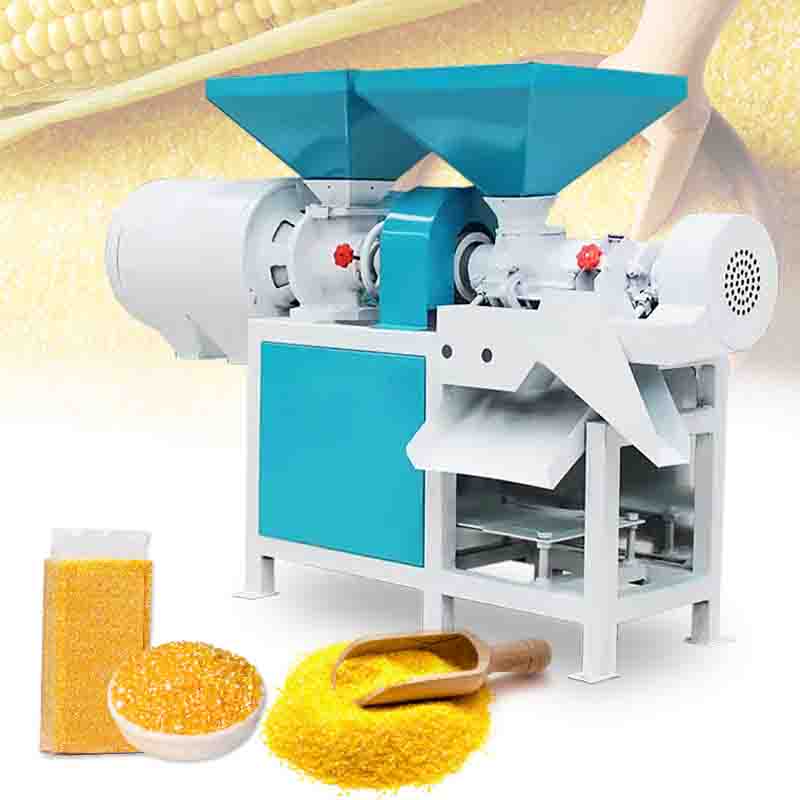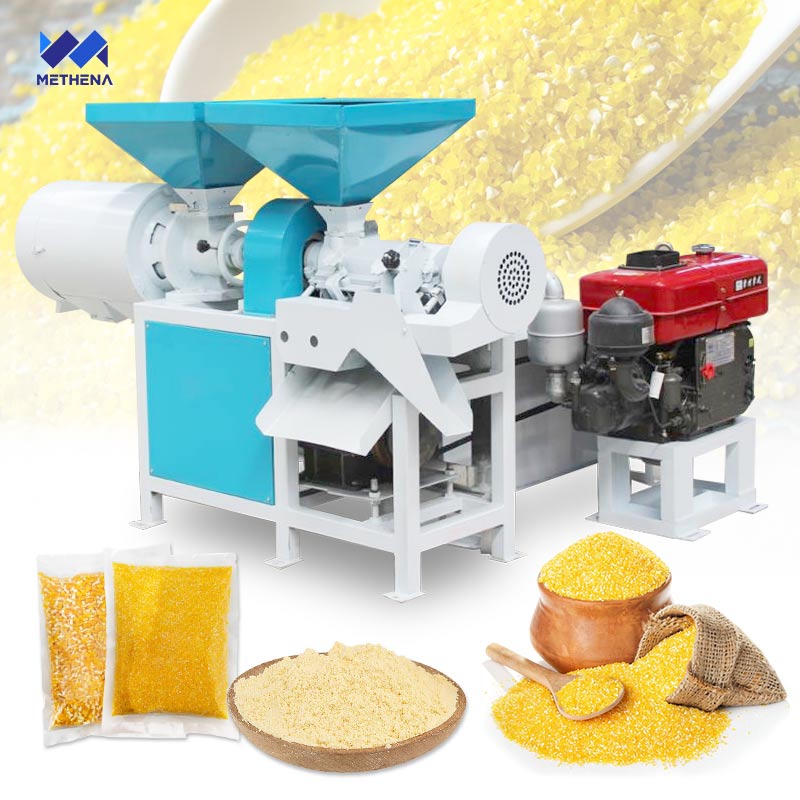
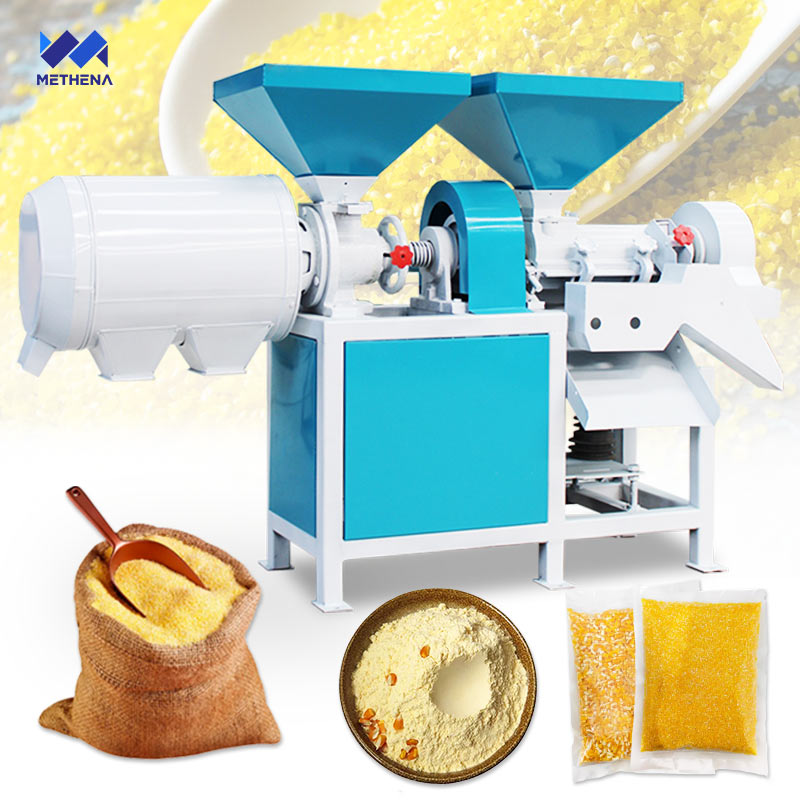
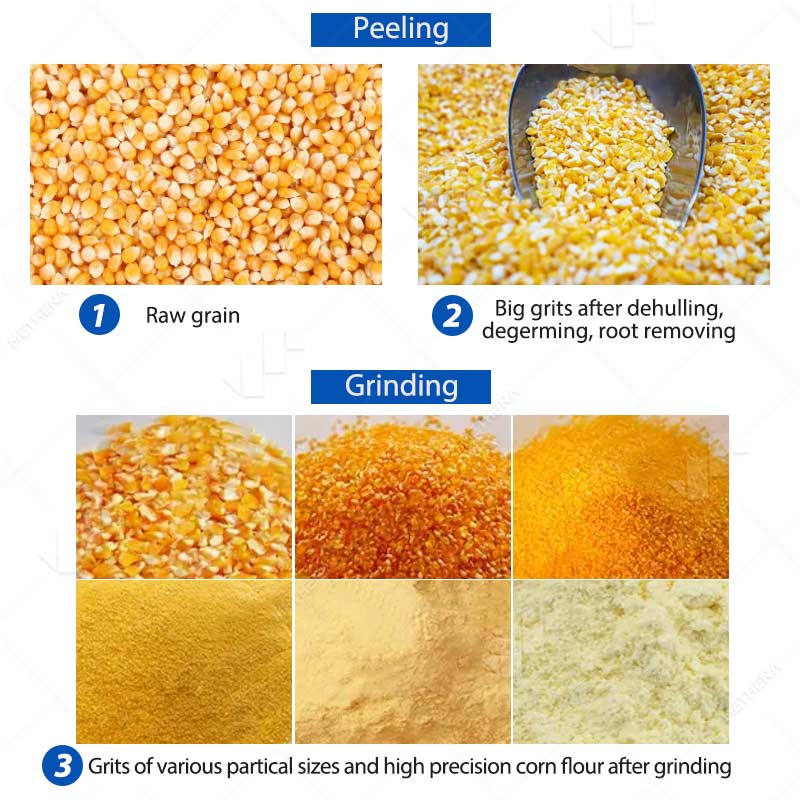
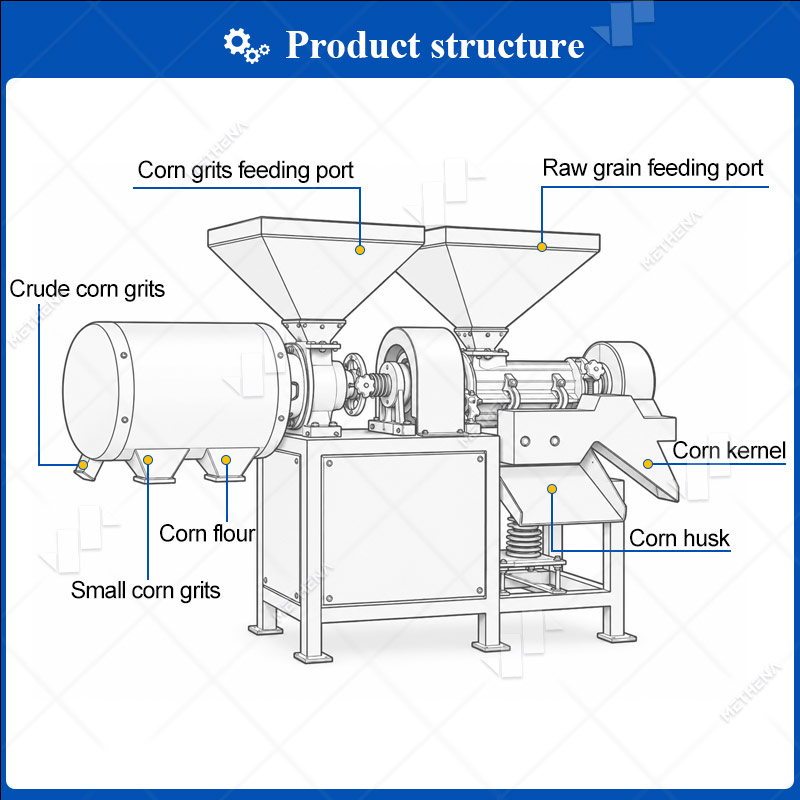
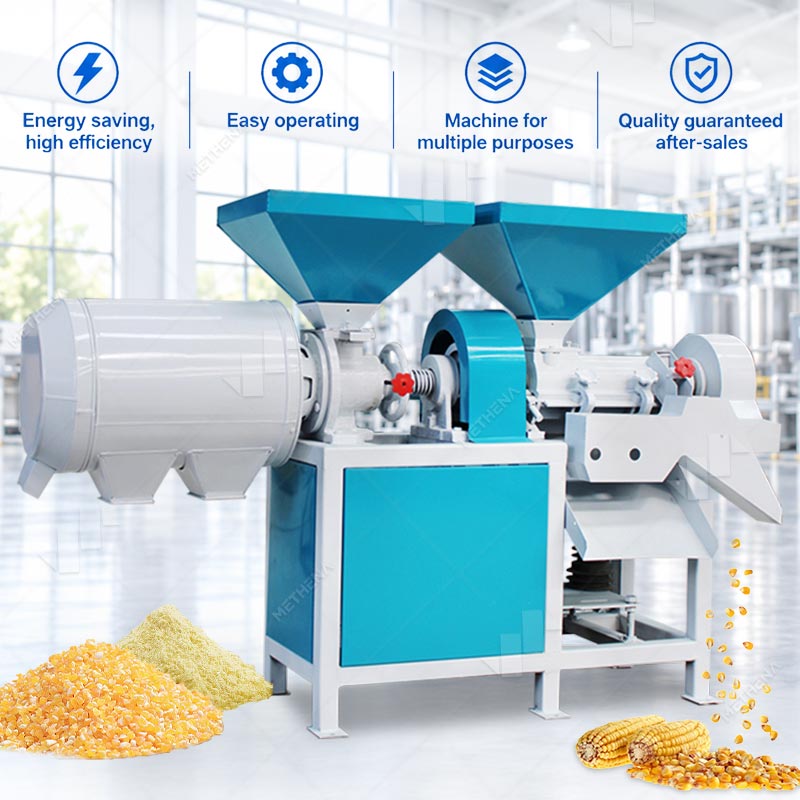
The Methena corn grits milling machine processes corn into coarse grits, fine grits, and corn flour through a four-stage process: crushing, dehulling, grinding, and sieving. It is well-suited for use in agricultural processing facilities, food production plants, and similar settings. A single machine handles the entire process—corn dehulling, grits production, flour grinding, and sieving.
Brand Name: Methena
Production Capacity: 500-1000 kg/h
Dimension(L*W*H): 2200*500*1200mm
Capacity: 600-800kg/h
Spindle Speed: 860r/min
Power Source: Electric
Material: Carbon Steel
Function: Processed Corn Products
Warranty: 1 Year
Machinery Test Report: Provided
Color: White And Blue
Certificate: ISO 9001, ISO 14001, ISO 45001, CE, BSCI, ETL
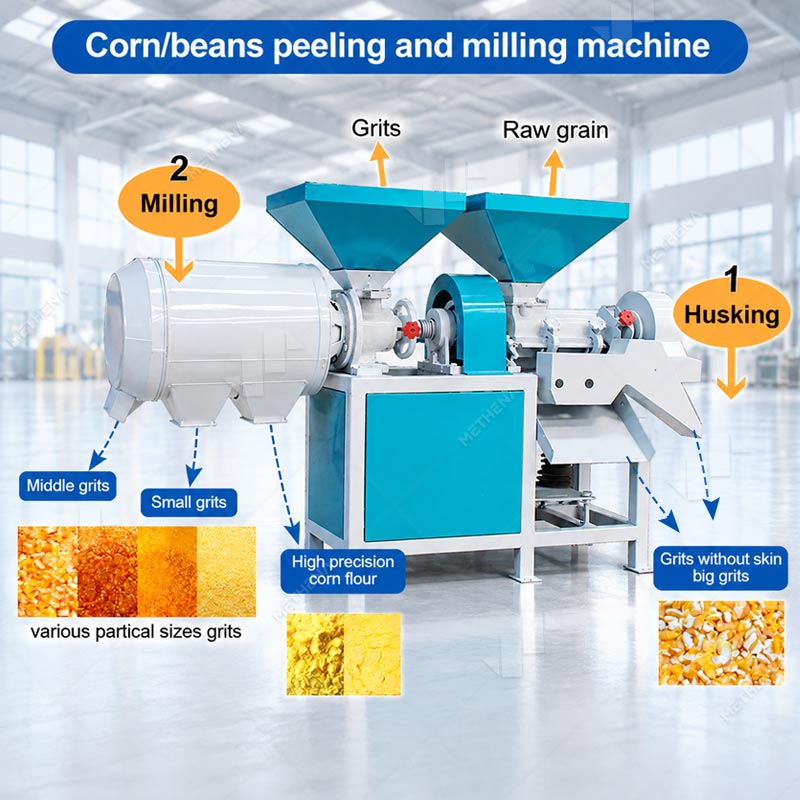
The Methena GD-3B Corn Grits Milling Machine combines maize peeling, milling, and screening on one frame. It processes shelled corn into coarse corn grits, fine corn grits, and corn flour, with separate outlets for collecting each grade. An adjustable milling handwheel lets operators change the grits size for different orders.
Featured model GD-3B · Power 7.5 kW · Finished products Coarse grits, fine grits, and corn flour
Prepared corn kernels enter the peeling hopper. The peeling section discharges kernels and husks through separate outlets. The operator then feeds the peeled kernels into the milling hopper. After milling, the screens sort the ground corn into coarse grits, fine grits, and flour for separate collection.
| Specification | GD-3B | GD-5B |
|---|---|---|
| Power | 7.5 kW | 11 kW |
| Machine weight | 300 kg | 350 kg |
| Machine dimensions (L × W × H) | 2,200 × 500 × 1,200 mm | 2,140 × 1,130 × 1,200 mm |
| Model selection | For lower-volume maize processing | For higher-throughput requirements |
When comparing models, tell us whether your hourly target is for peeling only or for finished grits after peeling, milling, and screening. We can review your target alongside the condition of your maize and the grade you need.
| Component | Function |
|---|---|
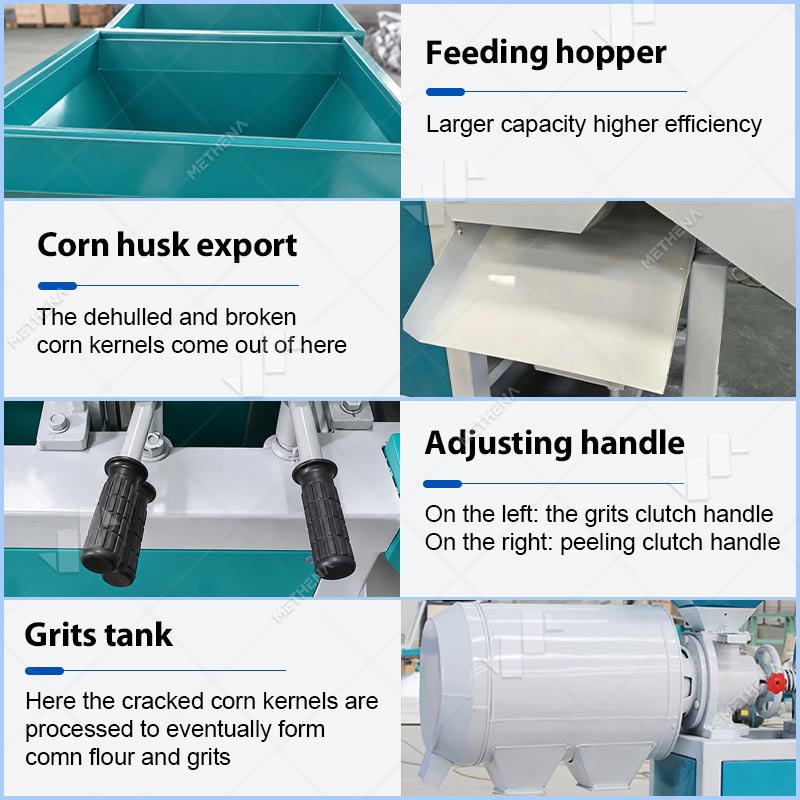
| Raw corn hopper and feed slide | The hopper accepts the prepared kernels. A sliding gate controls their entry into the peeling section. |
| Peeling pressure adjuster | Lets the operator set peeling pressure for the condition of the incoming grain. |
| Kernel and husk outlets | Discharge peeled kernels and separated husks into different collection points. |
| Milling hopper | Receives the peeled kernels for grinding in the second stage. |
| Handwheel and locking control | The handwheel changes the milling gap. The lock holds the selected setting. |
| Screening section and product outlets | Sort and discharge coarse grits, fine grits, and flour for separate collection. |
Peeling and milling on one frame. The integrated layout brings both operations into one workstation.
Three grades from one milling pass. Collect coarse grits, fine grits, and corn flour separately for different orders.
Adjustable grits size. Change the milling gap with the handwheel to suit your target texture.
Peeling pressure control. Adjust pressure to suit the condition of the maize before milling.
Separate husk discharge. Collect husks on the peeling side before transferring the kernels to the milling hopper.
Replaceable screens. Replace worn screens as part of routine maintenance. Ask for spare screens when requesting a quote.
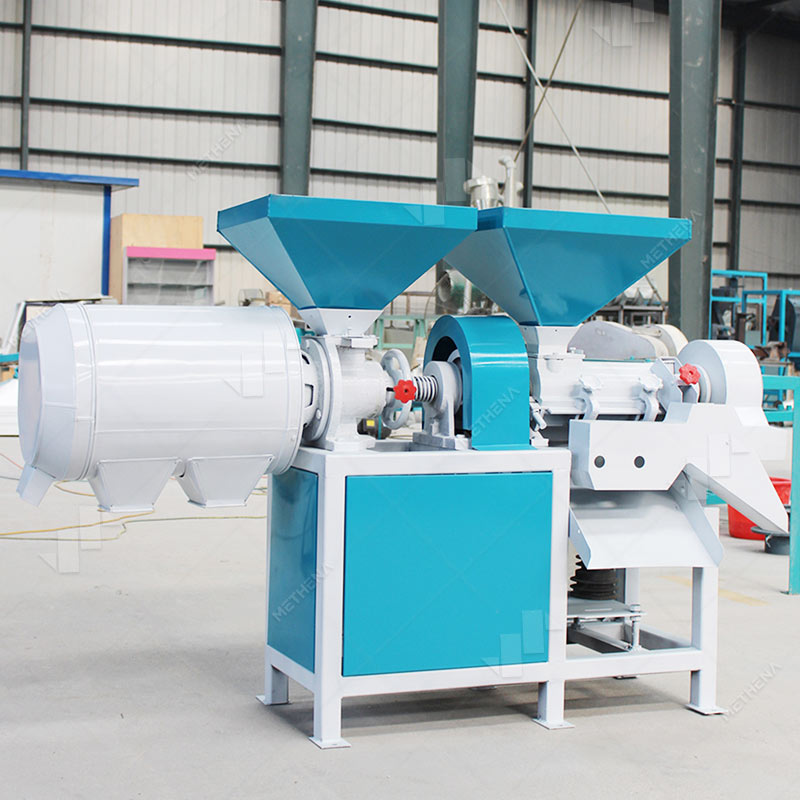
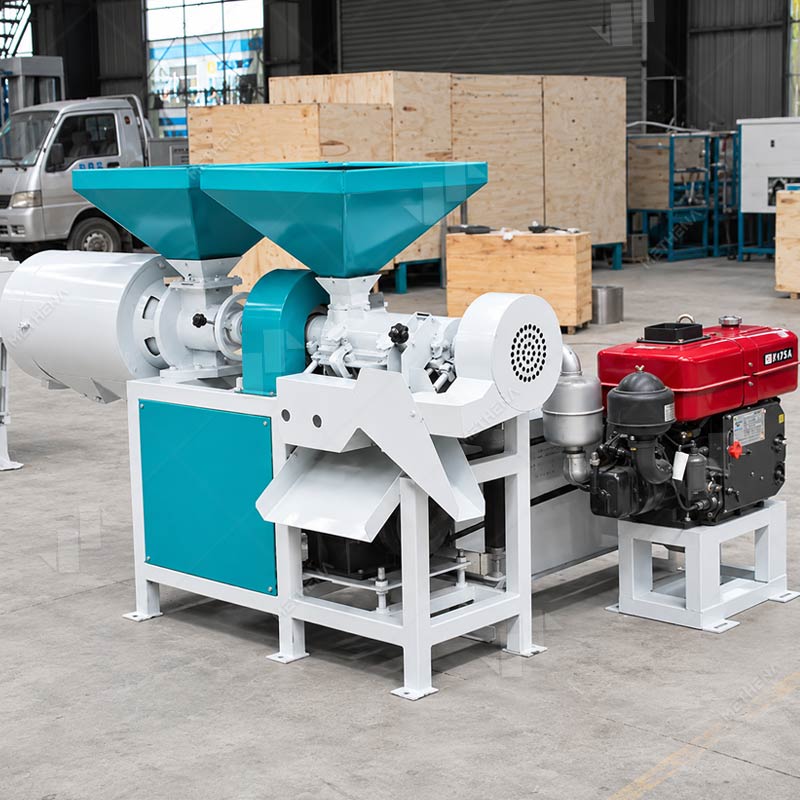
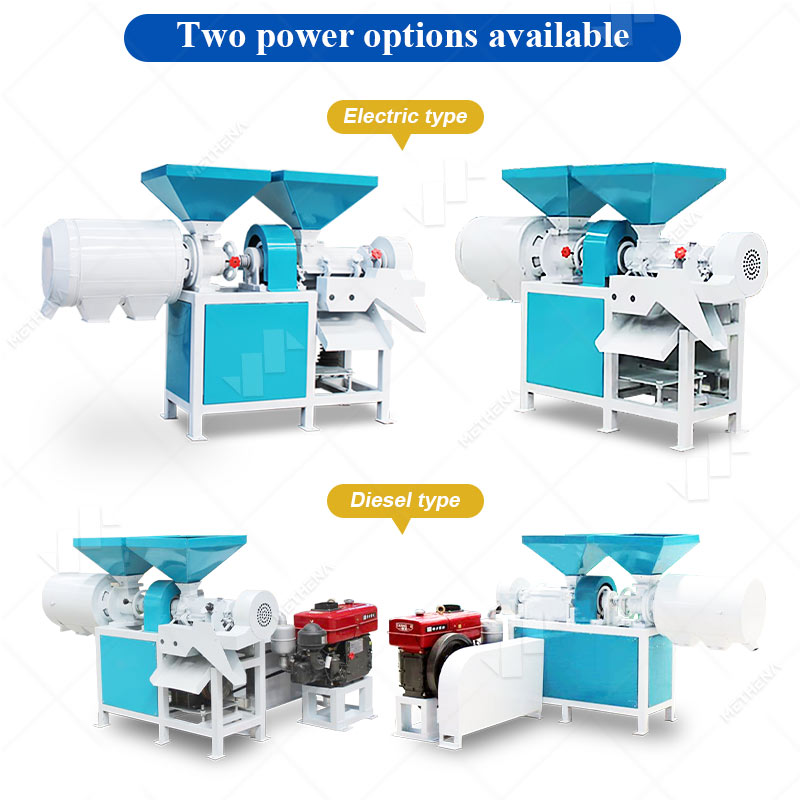
Rural maize processingProcess locally sourced corn into grits and flour for local sale or further processing.
Grain milling plantsAdd a dedicated maize processing station to a facility that handles multiple grains or product lines.
Food manufacturingPrepare milled corn ingredients for recipes that call for a specific texture or particle size.
Corn grits productionCollect coarse and fine grits separately to fill orders for different product grades.
Corn flour productionCollect the fine flour fraction through its own outlet for further processing or packing.
Retail and wholesale packingFeed the selected grade to a separate packaging machine for bagging.
Yes. Share your target particle size, mesh specification, or a photo of your existing product. We can review the milling setting and screen selection for that grade.
Conditioning may be recommended depending on the grain’s moisture and condition. Tell us whether you use freshly harvested or dried maize so we can discuss suitable preparation for your batch.
This page describes the machine’s maize processing configuration. If you need to process wheat, sorghum, or another grain, send the grain type and target product so we can confirm a suitable configuration.
Include your site voltage, frequency, and phase when requesting a quote. We’ll use those details to check the motor configuration before you order.
Lead time depends on the selected model, motor configuration, and stock availability. Share your destination and required delivery date so we can confirm the schedule in your quotation.










 Request a Quote
 More Products