In pork processing, the skinning step has long been a critical point affecting production efficiency and product value. Traditional manual skinning not only relies on the experience and judgment of skilled workers—resulting in uneven skin thickness, meat damage, and large fluctuations in yield—but also constitutes a human resource bottleneck for the entire production line.
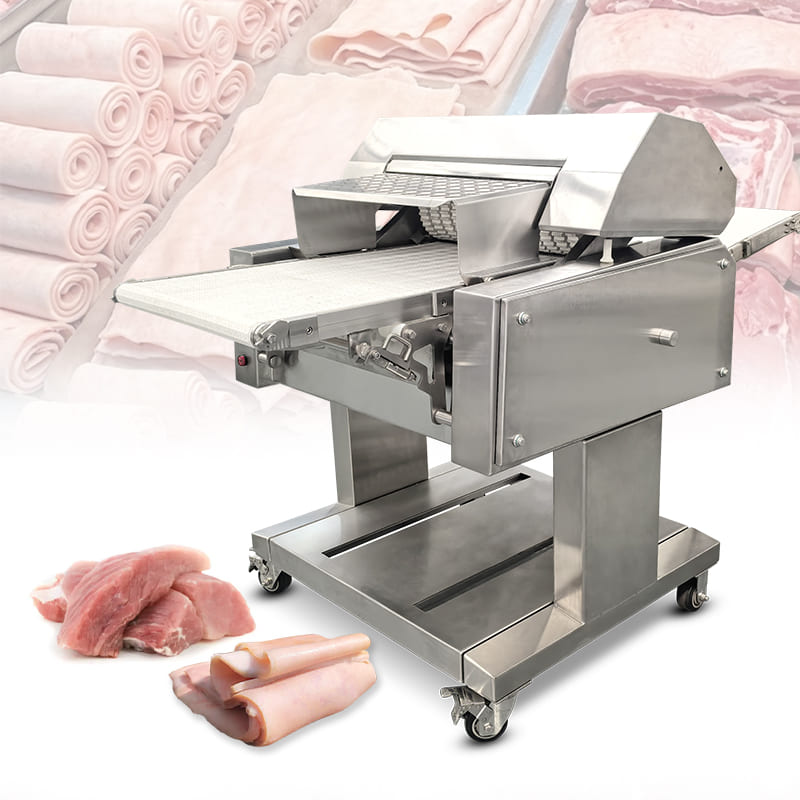
The design goal of the pork skinning machine is not simply to replace manual labor, but to incorporate the skin-fat separation process into a standardized and repeatable mechanical processing system. The equipment precisely peels the pork skin from the meat surface through the coordinated action of rotating blades and a fixed base plate, with the skin thickness adjustable within the range of 0.5~6mm.
| Material | 201 stainless steel, High Strength Stainless Steel Alloy, etc |
| Blade length | 300*20*1mm /434*20*1mm/499*20*1mm/620*20*1mm |
| Cutting width | 300mm/435mm/500mm/620mm |
| Peeled thickness | 0.5-6mm |
| Function | Peeled |
| Certification | ISO 9001, ISO 14001, ISO 45001, CE, BSCI, ETL |
| OEM/ODM Service | Acceptable |
| Processing | Skin removing |
| Feature | High Effiency |
| Color | Silver |
Methena Automatic Pork Skin Peeling Machine
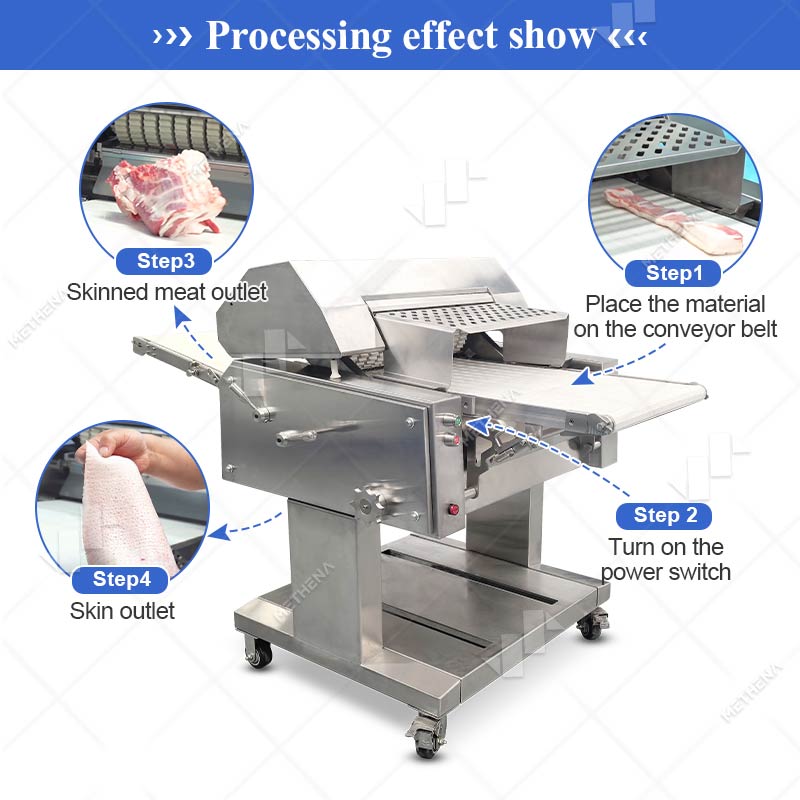
The pork skinning machine uses a high-speed rotating ring blade in conjunction with a fixed base plate to continuously and mechanically separate the skin and fat from the lean meat under the uniform propulsion of a conveyor belt. This transforms a process that was originally manual into a standardized operation that is quantifiable, replicable, and can be integrated into the production line rhythm.
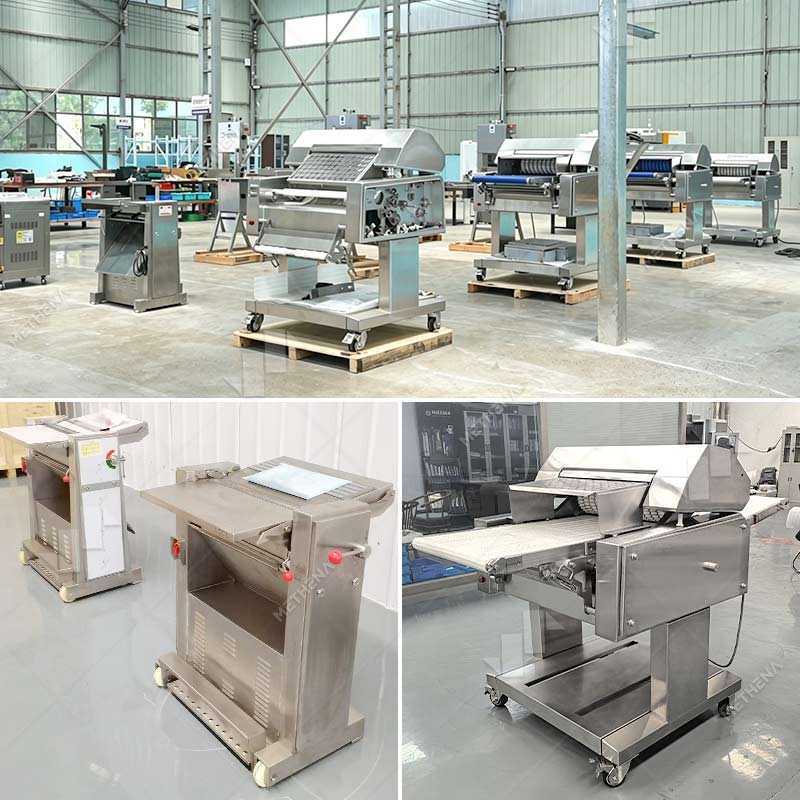
For a medium-sized slaughterhouse with a daily slaughter volume of over 500 heads, a single GD-620 skinning machine can complete the skinning of all pork belly segments within an 8-hour shift, with a stable shift output capacity of over 5 tons. Pork skinning machine - Processing effect show
| Parameter | GD-300 | GD-435 | GD-500 | GD-620 | HLK-600 |
|---|---|---|---|---|---|
| Power | 370W | 750W | 750W | 750W | 1.5kW |
| Voltage | 220V 1-phase | 220V/380V 3-phase | 220V/380V 3-phase | 220V/380V 3-phase | 380V 3-phase |
| Cutting Width | 300mm | 435mm | 500mm | 620mm | 620mm |
| Blade Size | 300×20×1mm | 434×20×1mm | 499×20×1mm | 620×20×1mm | 620×20×1mm |
| Peel Thickness | 0.6-6mm | 0.6-6mm | 0.6-6mm | 0.6-6mm | 0.5-6mm |
| Belt Speed | 18m/min | 24m/min | 24m/min | 24m/min | 20m/min |
| Dimensions (L×W×H) | 650×620×480mm | 750×710×880mm | 870×710×920mm | 970×820×930mm | 2000×1300×1100mm |
| Weight | 55kg | 130kg | 158kg | 186kg | 450kg |
| Best For | Small shops | Mid-scale processing | Mid-scale processing | Large plants | Continuous line |
GD-300 through GD-620 are bench/floor-standing models. HLK-600 is a conveyor-fed continuous production model. Selection guide: under 500kg/day → GD-300/GD-435; 500kg-2 tons/day → GD-500/GD-620; above 2 tons/day → HLK-600.
How It Works: Blade Speed, Press Roller, and Gap Control
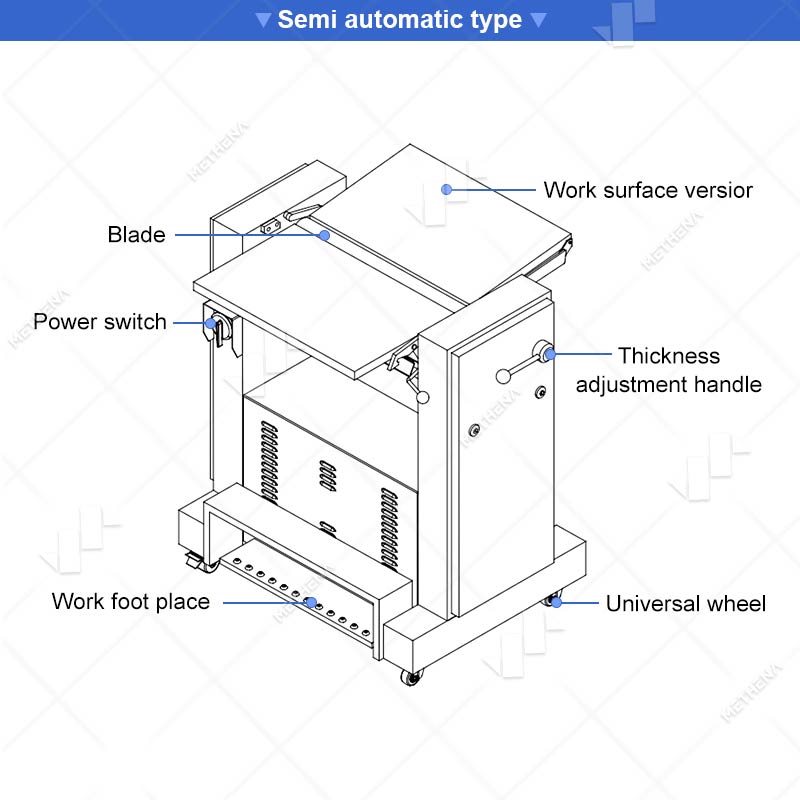
The cutting action is a shear between the rotary blade and the fixed bottom plate. The blade spins at constant RPM. Meat blocks enter the work zone on the infeed belt and pass under the press roller first. The press roller flattens and holds the block so the skin side sits flush against the blade's cutting plane. As the blade cuts into the fat layer beneath the skin, the thickness adjustment lever sets the gap — this gap determines how much fat stays on the meat. The separated skin exits above the blade through the skin discharge chute.
Meat placed on belt→Press roller flattens block→Blade cuts fat layer→Gap set 0.5-6mm→Skin separated→Meat outlet / Skin outlet
The combing groove lever handles a problem that does not show up in a spec sheet but matters on the floor: fat residue and skin fragments stick to the roller surface and blade housing gaps during continuous operation. Buildup causes feed slippage and rough cut surfaces. The combing groove cleans the roller after each pass, keeping the surface clean and cutting the frequency of manual stop-and-clean cycles.
The following machines complement the pork skinning machine in a meat processing line. Each is available as a standalone unit for independent procurement:
Receives skinned blocks and slices them to set thickness. Used for hotpot, bacon, and grilled meat product preparation.
Grinds skinned trimmings into ground meat at various mesh sizes. The front-end step for sausage, meatball, and patty production.
Cuts frozen meat blocks into sections. Pairs with the skinner to handle frozen raw material, giving the line flexibility for both chilled and frozen inputs.
Vacuum-seals skinned and sliced product to extend shelf life. Meets the cold-chain requirements of fresh-cut supply chains.
Flakes frozen blocks at -18°C into thin slices for downstream processing. Combined with the skinner, covers both chilled and frozen processing lines.
Injects brine into skinned meat blocks to improve yield and texture. A pre-processing step for marinated and cured meat products.
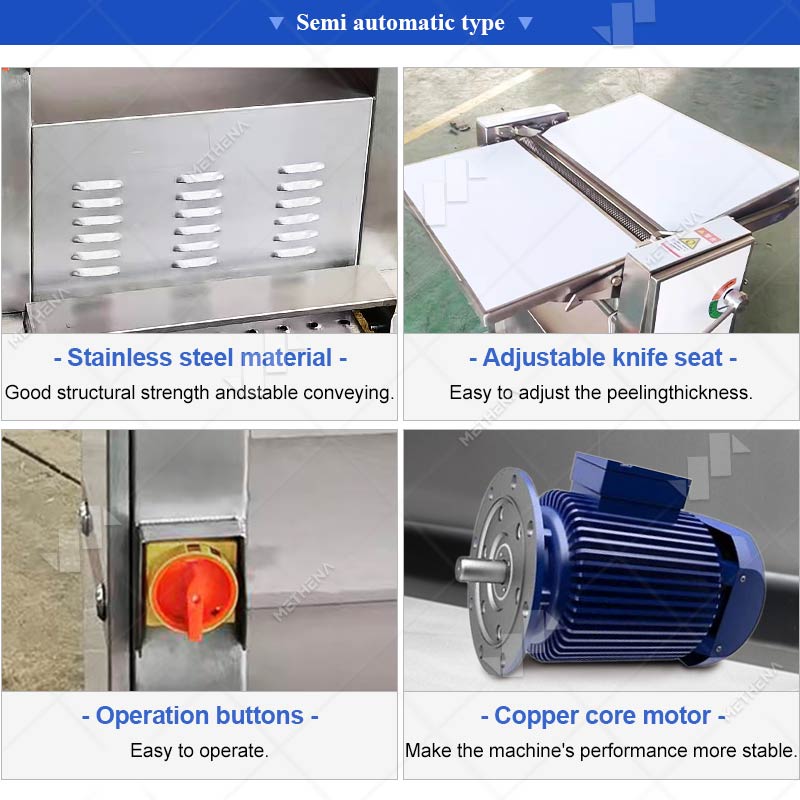
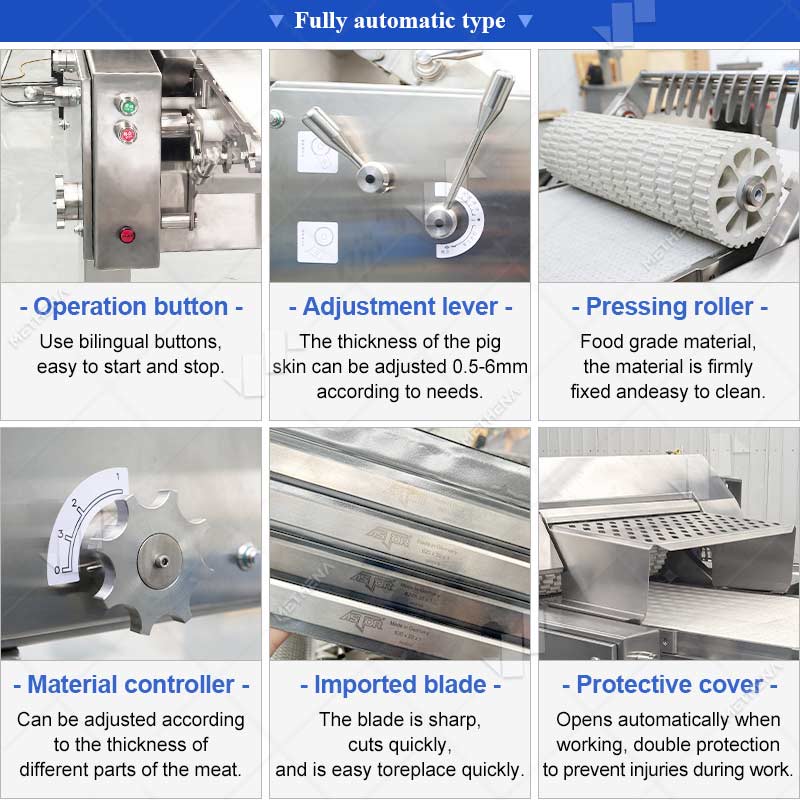
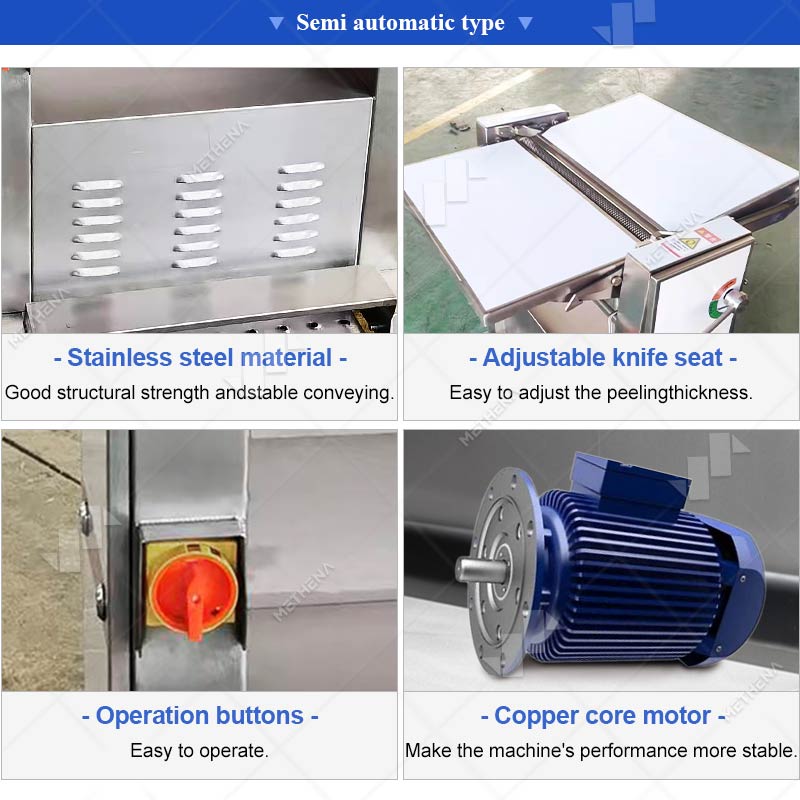
Copper-Core MotorPure copper windings. Heat dissipation is fast, load handling is stable. Runs continuous three-shift duty without thermal tripping. Power range 370W to 1.5kW across models.
Blade Assembly620×20×1mm high-strength stainless alloy. Edge retention runs 3-6 months depending on throughput. Quick-change blade seat — no special tools needed. Keep two sets rotating to eliminate downtime.
Press RollerFood-grade material. Flattens and positions the meat block so the skin side tracks the blade plane. Pressure is adjustable via the material controller to match different cuts and thicknesses.
Thickness Adjustment LeverStepless 0.5-6mm range. Set the target peel depth based on the cut and your customer's spec. ±0.3mm precision. Controls fat retention and lean yield directly.
Safety Guard and InterlockFull-coverage guard over the blade zone. Opening the guard cuts power automatically. Dual-safety design prevents contact with the high-speed blade — the baseline requirement for night-shift operation.
Frame and CastersStainless steel body, welded construction (not bolted). No crevices to trap residue. Industrial swivel casters with locks — one person can reposition the machine on the floor. CIP washdown compatible.
Abattoirs and Meat Processing PlantsThe core application. After splitting and primal cutting, bellies, shoulders, and hams need the skin removed before portion cutting and packaging. On a 300+ head-per-day line, skinning is the throughput bottleneck. Manual skinning caps at 6-8 blocks per minute per worker. The GD-620 at 24m/min hits 20-25 blocks per minute — enough to keep pace with the upstream splitting line without building a backlog.
Central Kitchens and Fresh-Cut SupplyCompanies running fresh-cut meat supply chains need standardized raw material. Peel thickness consistency determines the visual grade and price tier of the finished product. Machine skinning at ±0.3mm precision ensures every batch meets the same standard, eliminating manual sorting and reducing reject rates.
Prepared Foods and Health-Focused R&DLow-fat product lines and meal-prep manufacturers need aggressive skinning that removes subcutaneous fat without cutting into the lean layer and causing juice loss. The 0.5mm minimum thickness setting handles this — it strips the fat layer clean while leaving the lean fiber intact.
Independent Butchers and Small OperationsThe GD-300 measures 650×620×480mm and weighs 55kg. It runs on single-phase 220V — no three-phase power requirement. Fits a community butcher shop or small processing room. Swivel casters let one person move it out of the way when the floor space is needed for something else.











 Request a Quote
 More Products