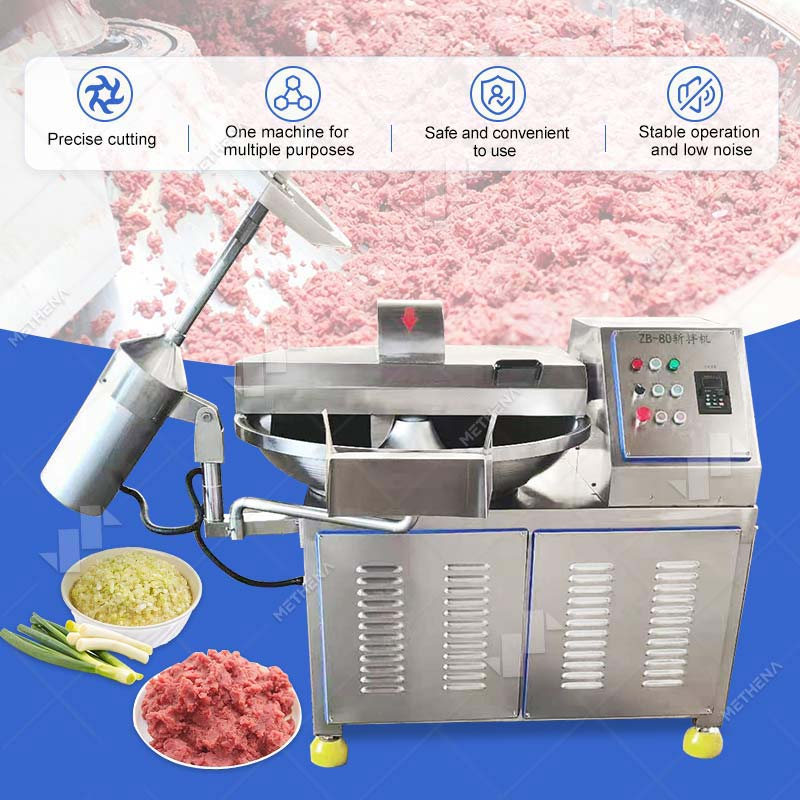
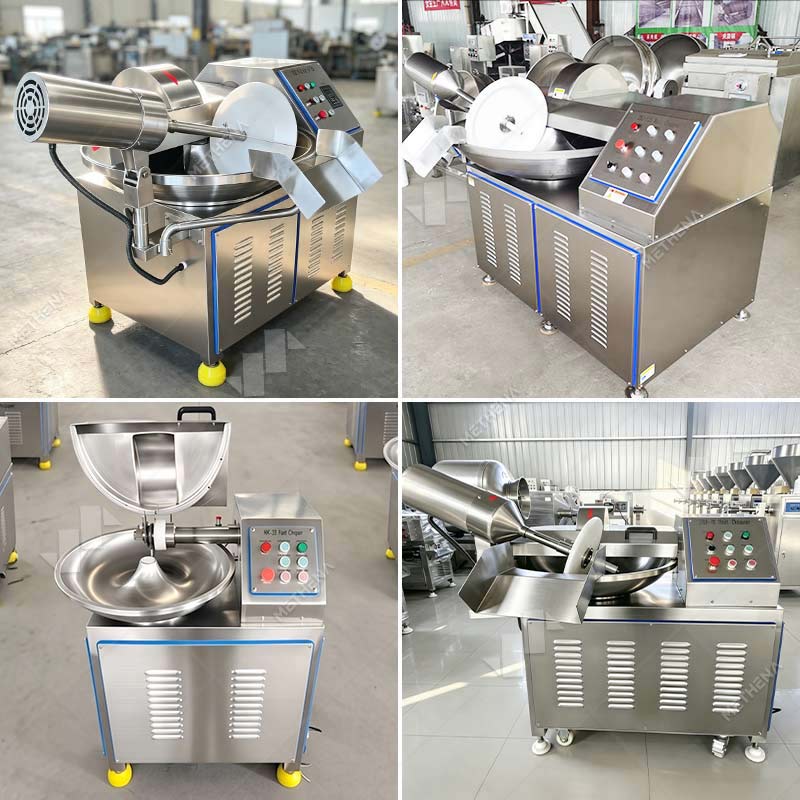
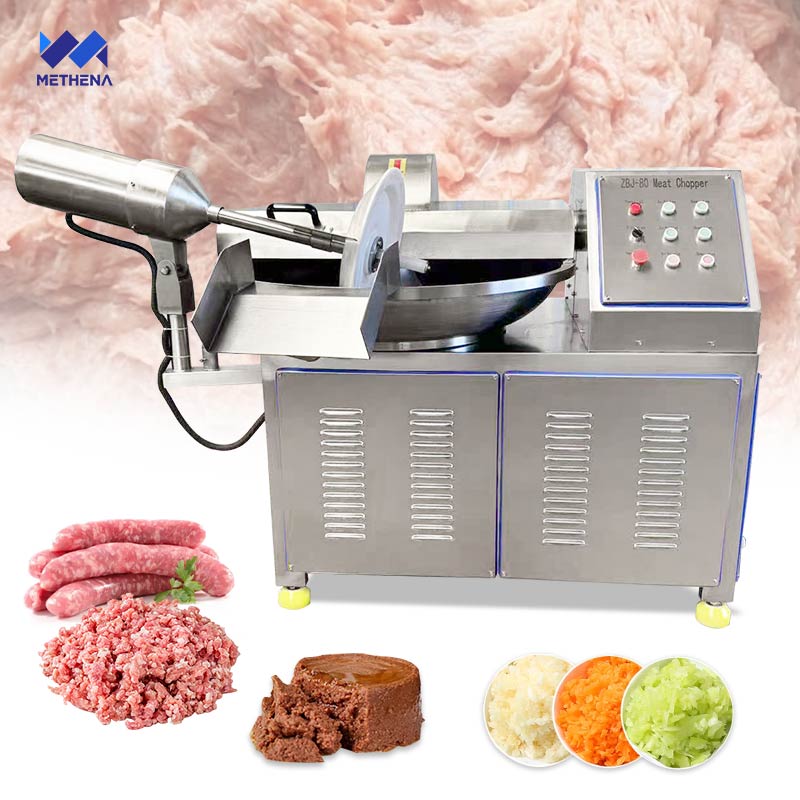
In the preparation of fillings for further-processed meat products, the chopping and mixing stage directly determines the final product's texture, elasticity, fineness, and yield. The industrial meat bowl cutter is a critical piece of equipment in this process; it rapidly reduces primary ingredients—such as meat chunks and fat—into a uniform, fine paste or mince through the cutting action of high-speed rotating blades, while simultaneously emulsifying and blending water, seasonings, and additives to create a stable emulsion system.
| Capacity | 14-100 L/Pot |
| Material | Stainless steel |
| Blade Speed | 3700 r/min |
| Advantage | Easy operation and high efficiency |
| Applicable raw materials | Meat,Vegetable, Seafood |
| Function | Meat Cutting Chopping Mixing |
| Certification | ISO 9001, ISO 14001, ISO 45001, CE, BSCI, ETL |
| Feature | Saving time and effort |
| Type | Electricity |
| Usage | Commerical or industrial use |
In the production of sausages, meatballs, luncheon meat, and surimi-based seafood products, simple grinding or mixing cannot meet the textural requirements for high elasticity, fine texture, and moisture retention. Traditional bowl cutters often suffer from issues such as insufficient blade speed, excessive clearance between blades and the bowl, or overheating of the material. These factors lead to inadequate breakdown of muscle fibers and low extraction rates of salt-soluble proteins, resulting in quality defects like fat separation ("oiling out"), shrinkage during cooking, and a loose, crumbly texture.
The Methena industrial bowl cutter is a critical piece of equipment for the pre-processing and emulsification stages of meat product manufacturing. Utilizing a blade tip speed of up to 3,700 RPM and micro-clearance cutting technology (gap <2mm), the machine rapidly chops, homogenizes, and impacts meat chunks, fat, connective tissue, ice water, and additives. This process accelerates the extraction of myofibrillar proteins, creating a stable "water-protein-fat" emulsified gel matrix.
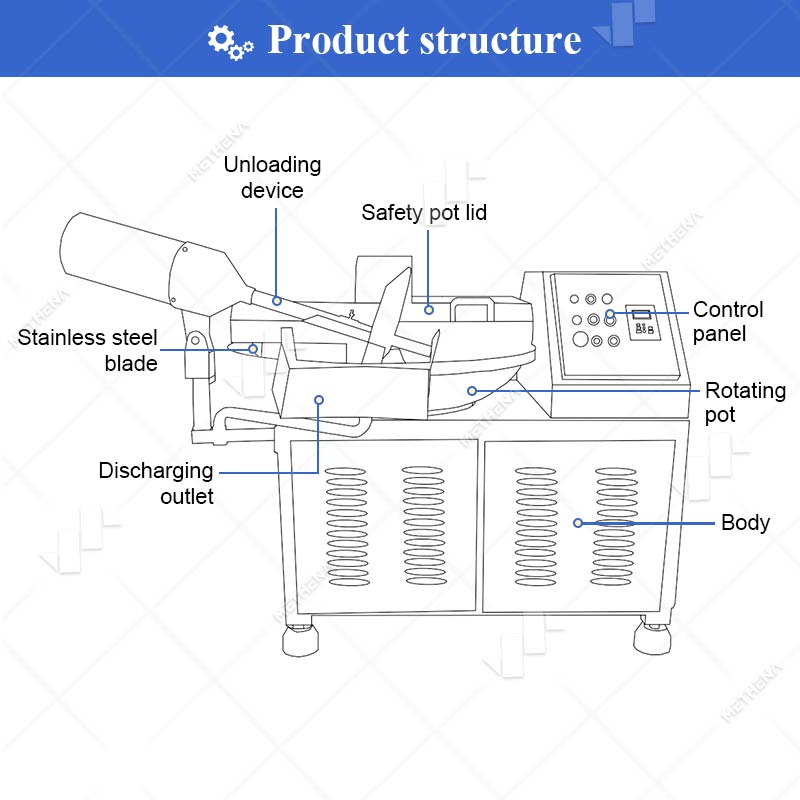
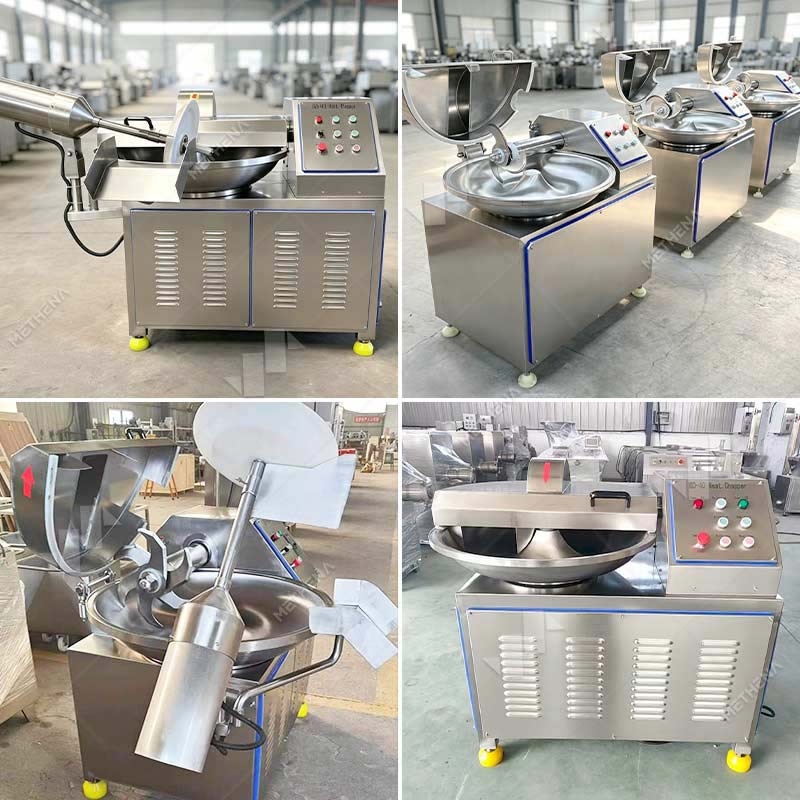
The equipment integrates features such as a spill-proof bowl with micro-clearance design, an automatic unloading system, safety interlocks (auto-stop upon lid opening), and variable frequency speed control. It achieves material emulsification with minimal temperature rise, producing a high-quality meat paste characterized by high elasticity, excellent water retention, and a smooth, glossy appearance—ideal for subsequent filling, forming, and cooking processes.
| Parameter | GD-20L | GD-40L | GD-80L | GD-125L |
|---|---|---|---|---|
| Capacity per Batch | 15 kg/batch | 35 kg/batch | 70 kg/batch | 110 kg/batch |
| Total Power | 4.1 kW | 5.1 kW | 16.5 kW | 31 kW |
| Max Blade Speed | 3700 r/min | 3700 r/min | 3700 r/min | 3700 r/min |
| Blade-to-Bowl Clearance | <2 mm | <2 mm | <2 mm | <2 mm |
| Dimensions (L×W×H) | 780×600×850 mm | 1100×830×1080 mm | 1820×1380×1260 mm | 2020×1450×1300 mm |
| Machine Weight | 400 kg | 1040 kg | 1450 kg | 1800 kg |
| Operating Voltage | 380V / 220V (optional) | 380V / 220V (optional) | 380V / 220V (optional) | 380V / 220V (optional) |
| Material | Stainless Steel (201/304 optional) | Stainless Steel (201/304 optional) | Stainless Steel (201/304 optional) | Stainless Steel (201/304 optional) |
| Number of Blades | 3 | 3 | 6 | 6 |
| Unloading Device | Optional | Optional | Standard | Standard |
Note: Customization services (OEM/ODM) are available. Configuration can be tailored according to specific product types, capacity requirements, and voltage specifications.
Cell-Wall Shearing and Fiber Separation:
High-hardness stainless steel blades rotate at high speed within a curved bowl, subjecting meat chunks entering the cutting zone to high-frequency shearing that instantly reduces coarse muscle fibers to micron-scale particles.
Protein Extraction and Hydration:
In the presence of added salt and ice water (or crushed ice), the mechanical forces generated by high-speed shearing rapidly disrupt the sarcolemma. This extracts significant quantities of deep-seated myofibrillar proteins (myosin and actin) into the aqueous phase, creating a protein solution with high viscoelasticity.
Fat Micronization and Emulsification:
The blades further refine animal fat, breaking it down into micron-sized globules. The extracted salt-soluble proteins rapidly adsorb onto the surface of these fat globules to form a protective film, establishing a stable emulsion gel that effectively prevents fat separation ("oil-out") and moisture loss ("weeping") during subsequent thermal processing.
Low-Temperature Control and Cooling Mechanism:
The entire chopping process is completed efficiently within a short timeframe. Through optimized cutting dynamics and ice-water absorption, the temperature rise of the material is strictly controlled within safe processing limits, preventing protein denaturation and loss of functionality caused by localized overheating.
Centrifugal Discharge and Automatic Unloading:
Upon completion of the process, a rotating automatic discharge plate is lowered; centrifugal force and a discharge scraper work together to rapidly eject the viscous meat paste from the bowl, significantly reducing auxiliary downtime between production shifts.
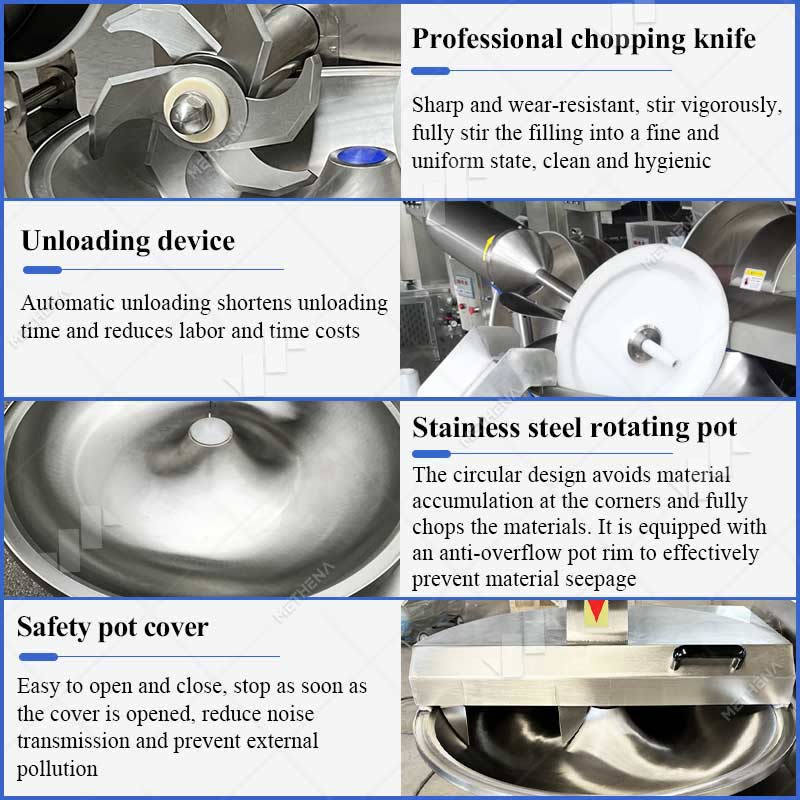
High-Precision Blade-to-Bowl Clearance and Micro-Gap Cutting:The clearance between the cutter tip and the rotating bowl wall is precisely controlled to under 2mm, ensuring thorough processing of meat at both the bottom and edges, eliminating any unprocessed "blind spots."
Carbide/Special Alloy Cutters (Imported Options Available):Blades are crafted from high-chromium, high-carbon stainless steel or 9CrSi special alloy and undergo cryogenic heat treatment; they feature sharp, wear-resistant edges and excellent toughness, resisting chipping or deformation even under heavy-load operation.
Cast Stainless Steel Rotating Bowl with Anti-Spill Rim:The bowl features a one-piece cast stainless steel structure with uniform wall thickness for stable heat conduction. The upper rim is designed with a physical anti-spill lip to prevent highly fluid liquids or thin meat slurries from leaking outward during high-speed operation.
Safety Bowl Cover with Micro-Gap Design and Auto-Stop Interlock:The sealed safety cover effectively reduces high-frequency cutting noise and prevents foreign objects from falling in; equipped with gravity and magnetic safety interlocks, the system instantly brakes and stops the cutter motor if the cover is lifted.
Pneumatic/Electric Automatic Unloading System :Features an independently powered centrifugal unloading disc and discharge chute; eliminates the need for manual scraping, allowing the entire batch of viscous meat paste to be emptied within 30 seconds.
Variable Frequency Drive (VFD) and Vacuum Functionality :Supports stepless adjustment of blade speed (0–3700 RPM), accommodating diverse processing requirements ranging from coarse chopping to ultra-fine emulsification.
Western-style and Chinese-style Sausages:Frankfurters, Vienna sausages, hot dogs, Taiwanese-style grilled sausages, mini sausages, and luncheon meat; achieves deep emulsification of fat and lean meat.
Meat Processing Plants:The GD-125L model features a large 110kg-per-batch capacity to meet industrial-scale production needs; high-speed chopping ensures a fine meat paste texture and superior emulsification, guaranteeing the sausage's elasticity and water-holding capacity.
High-Elasticity Meatballs and Pastes:Chaozhou-style beef balls, pork balls, chicken balls, fish balls, shrimp paste, and cuttlefish paste; rapidly develops protein gelation and high elasticity.
Seafood Surimi and Analogue Products:Fine homogenization for processed seafood products such as crab sticks, fish tofu, thousand-layer tofu, and chikuwa.
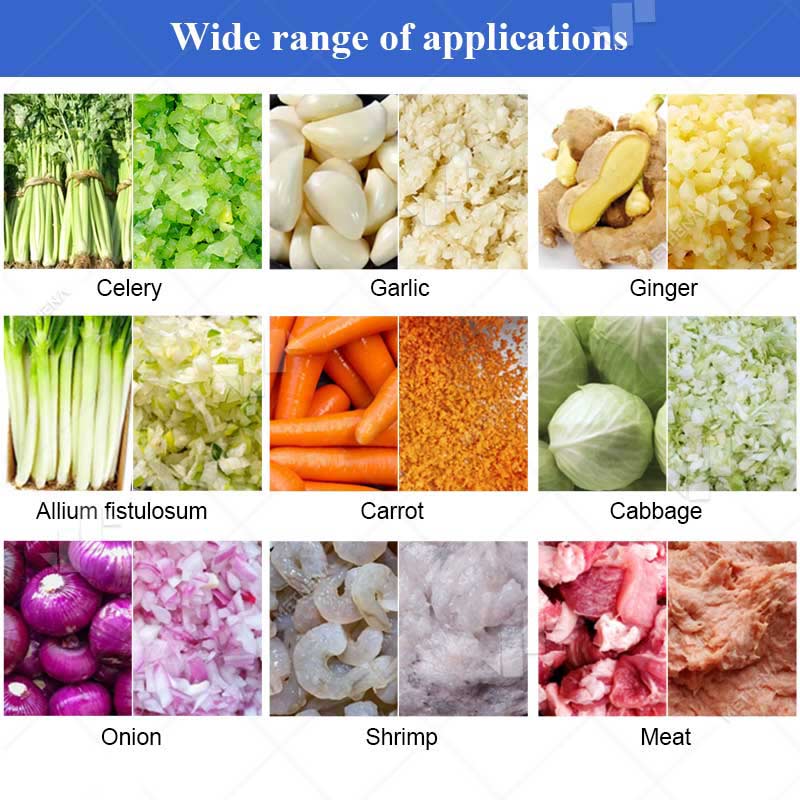
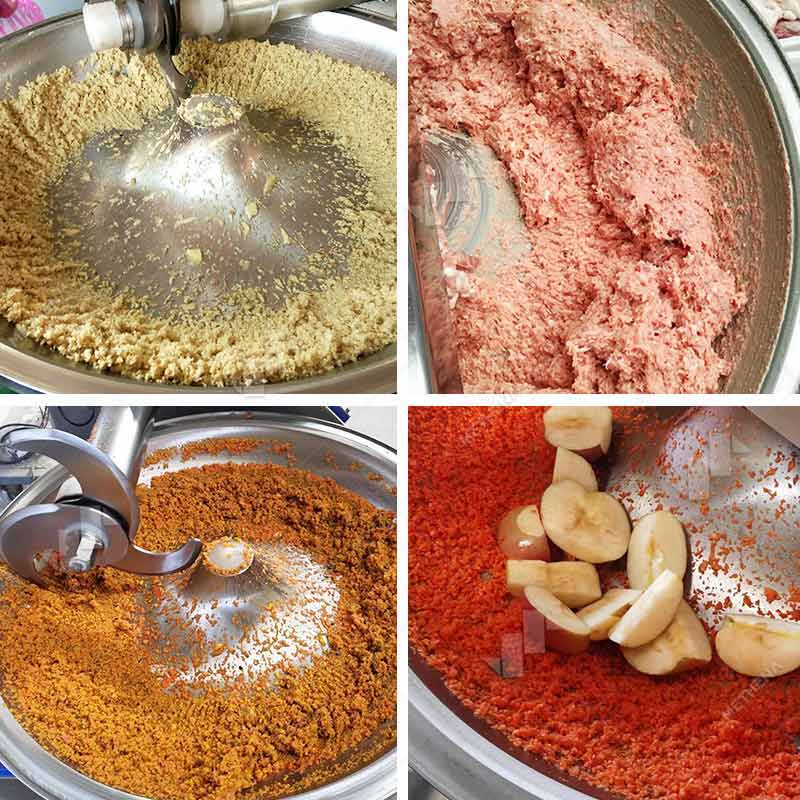
Condiments, Sauces, and Fruit/Vegetable Purees:Efficient fine chopping and emulsification of garlic paste, ginger paste, minced celery, chili sauce, salad dressings, mayonnaise, and nut pastes (peanut butter, sesame paste).
Pet Food and Wet Food:High-speed chopping, homogenization, and mixing of meat pastes for canned pet food and freeze-dried fresh meat-based meals.
Q1: How long does it take to process a single batch of meat paste?
A: Processing speed is extremely high. For standard sausage emulsions or meatball paste, the full cycle from loading to high-speed emulsification and discharge takes only 3 to 5 minutes per batch.
Q2: Can the bowl cutter process large frozen meat blocks directly?
A: Large frozen blocks should not be loaded whole. Raw meat should first pass through a frozen meat flaker/block cutter or a frozen meat grinder to reduce particle size before bowl chopping. This protects blade edges and yields optimal emulsification.
Q3: What is the expected lifespan of the chopping blades, and how are they maintained?
A: Blades are forged from high-strength stainless steel or alloy. Under normal operation with boneless meat materials, blade lifespan exceeds 1 to 2 years. We recommend inspecting blade edges every few months and resharpening them with specialized blade grinders when necessary.
Q4: Is an automatic discharge disk necessary for a 40L model?
A: The 20L model is small enough for manual shoveling. For the 40L model, an automatic discharger is an optional upgrade that reduces manual labor. For 80L and 125L models, automatic discharge systems come as standard equipment.
Q5: Where is the bowl cutter positioned within a complete sausage production line?
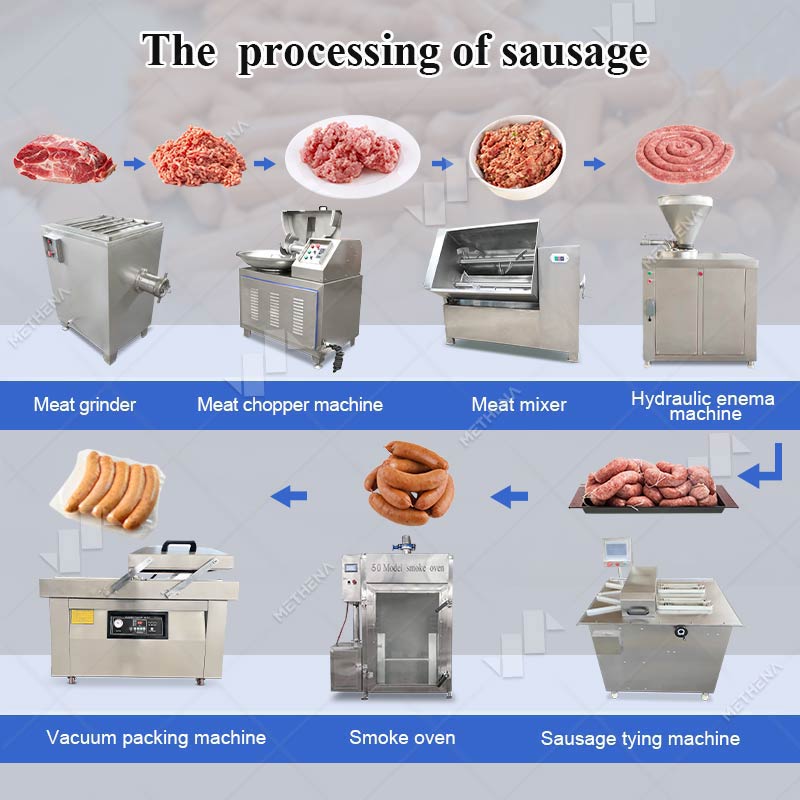
A: The standard sausage line sequence is: Frozen Meat Cutter ➔ Frozen Meat Grinder ➔ High-Speed Meat Bowl Cutter ➔ Stuffing Mixer (Optional for adding whole particulates) ➔ Vacuum Sausage Stuffer ➔ Thread Tying Machine ➔ Smoking & Cooking Chamber.
Q6: How do you clean and sanitize the machine?
A: After disconnecting the power, lift the safety hood and wash down the rotating bowl, blade set, and frame using a high-pressure water spray. Drive bearings and electrical cabinets feature robust waterproof sealing, and bottom drainage outlets ensure complete cleaning without liquid retention.











 Request a Quote
 More Products