Author: Methena / Release Time: 2026-03-23 / Pageviews:
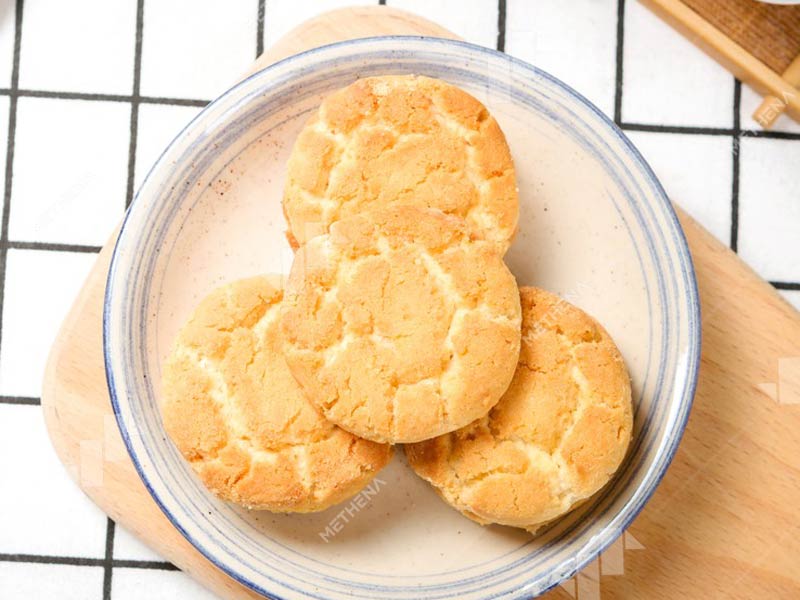
In the long history of pastries, peach crisp has always held an irreplaceable position. It is not only the lingering aroma of lard in the memory of the older generation but also the representative of “low-sugar Chinese pastries” favored by modern young consumers. Its multiple layers of crisp texture, naturally unfolding “blooming” cracks, and melt-in-the-mouth delicacy make peach crisp a perennial classic in the baking market.
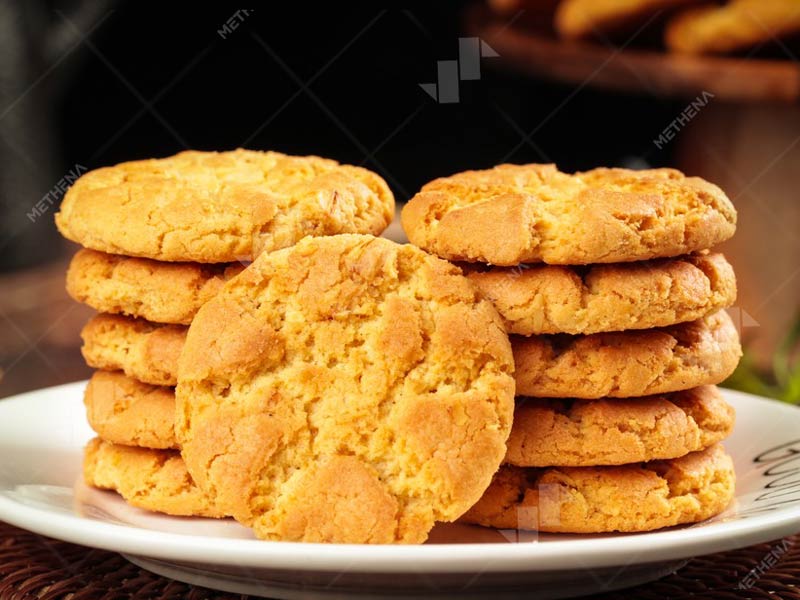
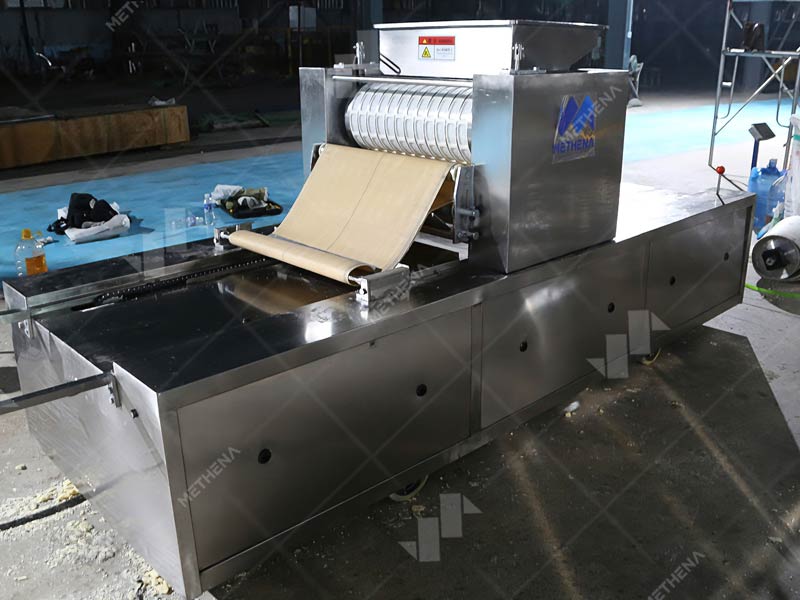
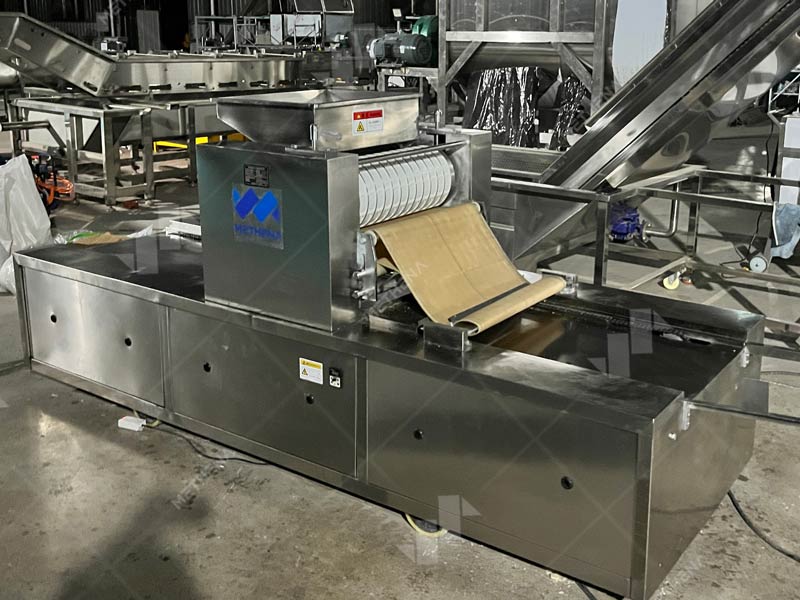
With increasing demands for standardized quality, healthy recipes, and large-scale production, traditional handmade methods are gradually being upgraded to automated, continuous production. In modern peach crisp processing, every stage from dough mixing, forming, to baking places higher requirements on equipment stability and precise process control. Professional peach biscuit maker machines and intelligent baking equipment have thus become essential for achieving high-quality mass production.
There is a saying in the industry: “30% formula, 70% baking.” For peach crisp, the baking process directly determines the outcome.
◭ Core Idea: The formula is only the foundation; the physical changes during baking are the essence of quality.
◭ Risk Avoidance: Deviating from standard temperature zones can directly result in Peach Crisp failing to “bloom,” insufficient crispness, or excessive fragility, making it unsuitable for retail distribution.
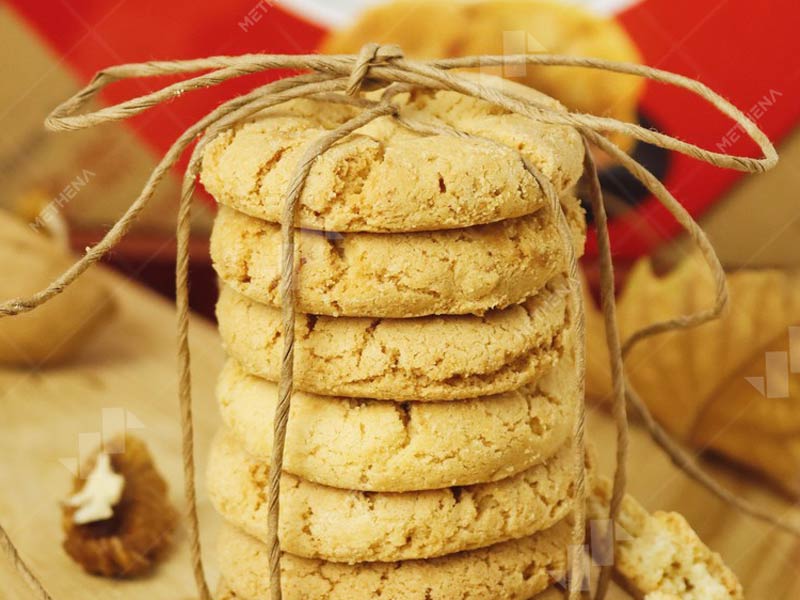
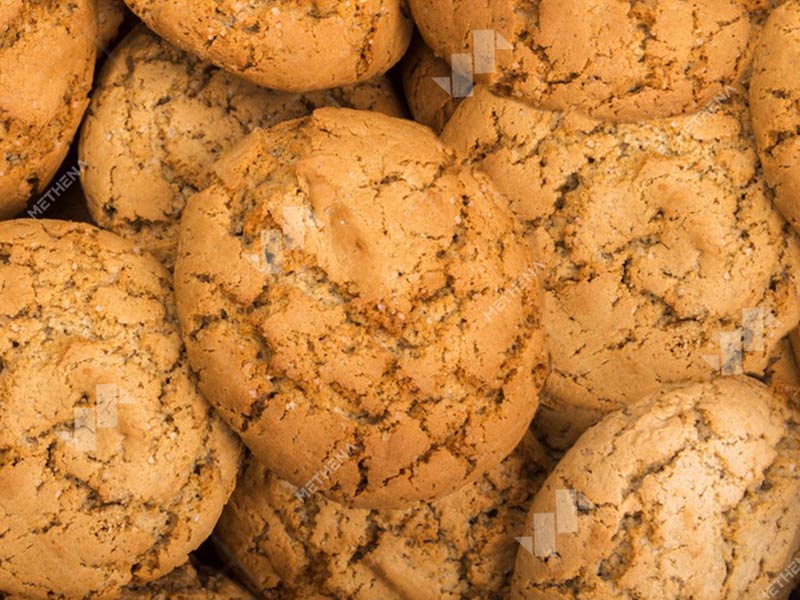
Sugar-free peach crisp often faces a visual challenge due to the lack of sucrose-induced maillard reaction and structural support.
● Temperature Compensation: Sugar-free variants have difficulty rising. Blindly adding excessive malt syrup to force blooming may result in sticky biscuits and compromise the healthy selling point. Technical solutions can overcome this.
● Forced Blooming: The most scientific approach is to use early-stage high heat (instant thermal pressure generated at 250–260°C) to allow the dough to expand before losing moisture, creating perfect natural cracks.
To ensure the peach crisp possesses both "visual appeal" and "internal quality," it is highly recommended to strictly implement the following temperature zone scheme:
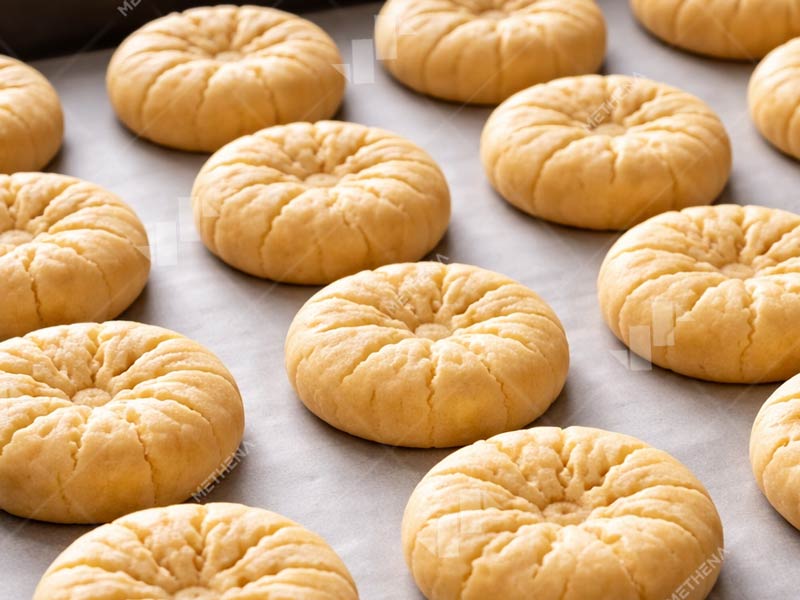
◮ Early Stage (Power Sprint Layer): Set the temperature at 250–260°C. During this phase, the chimney should be kept closed or only slightly open to accumulate heat and promote the "blooming" (cracking) process.
◮ Middle Stage (Stable Setting Layer): Set the temperature at 220–230°C. This stage is critical for the structural setting of the peach crisp, ensuring the patterns are fixed and do not collapse.
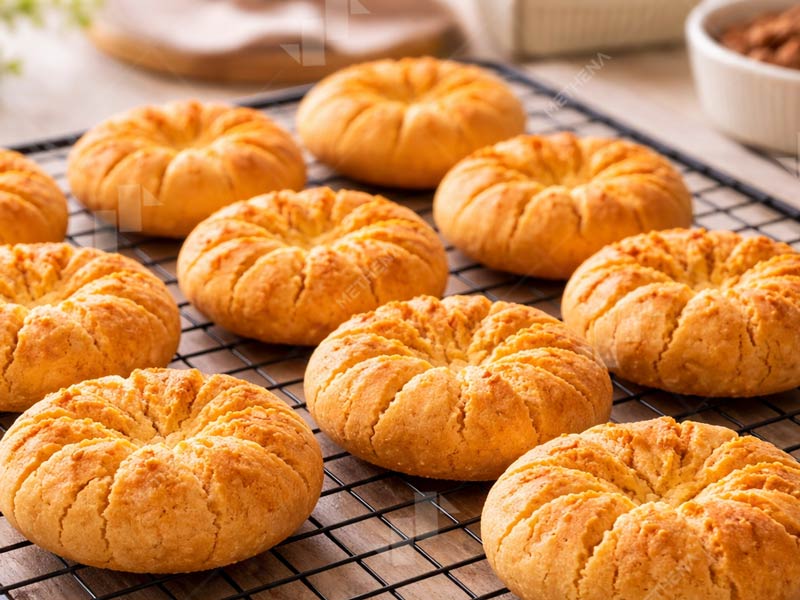
◮ Late Stage (Dehydration and Anti-Breakage Layer): Control the temperature at approximately 150°C. At this point, the chimney must be fully opened to rapidly discharge steam, allowing the Peach Crisp to dehydrate completely. This is the key to ensuring the final product is crispy without being brittle, while maintaining a long shelf life.
Chimney adjustment is not just for venting; it regulates the internal pressure of the oven.
◍ Early "Pressure Build-Up" Stage: To bloom the peach crisp, the chimney is partially or fully closed during the first critical minutes. This traps heat and steam inside, creating an outward pressure that forces the dough to expand and the crust to crack naturally. This is why some Peach Crisp develops beautiful, deep natural patterns—the secret lies in this “accumulated momentum.”
◍ Later "Venting" Tage: To ensure crispness, fully open the chimney as the peach crisp approaches set structure. Efficient air exchange removes internal moisture, resulting in golden color, crisp texture, and melt-in-the-mouth quality. Mastering this rhythm of “pressure and release” is key to consistent, high-quality Peach Crisp that stays crisp for longer.
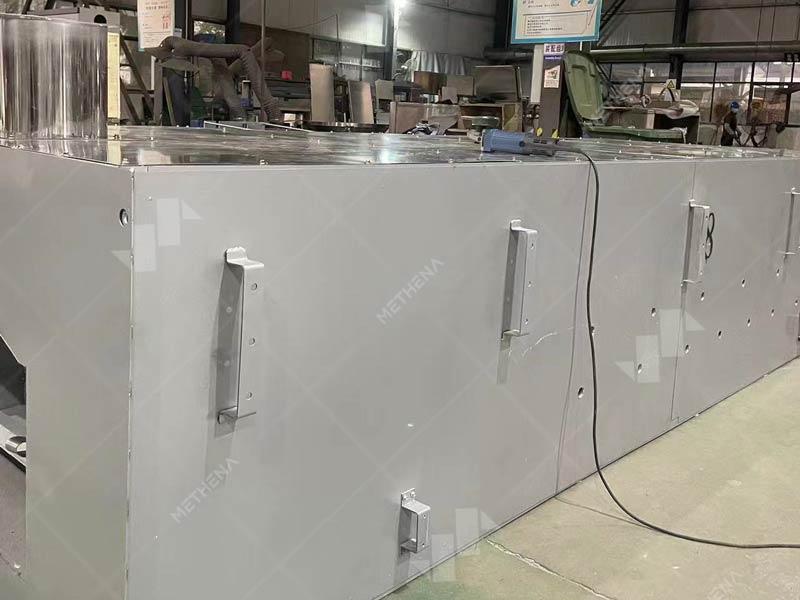
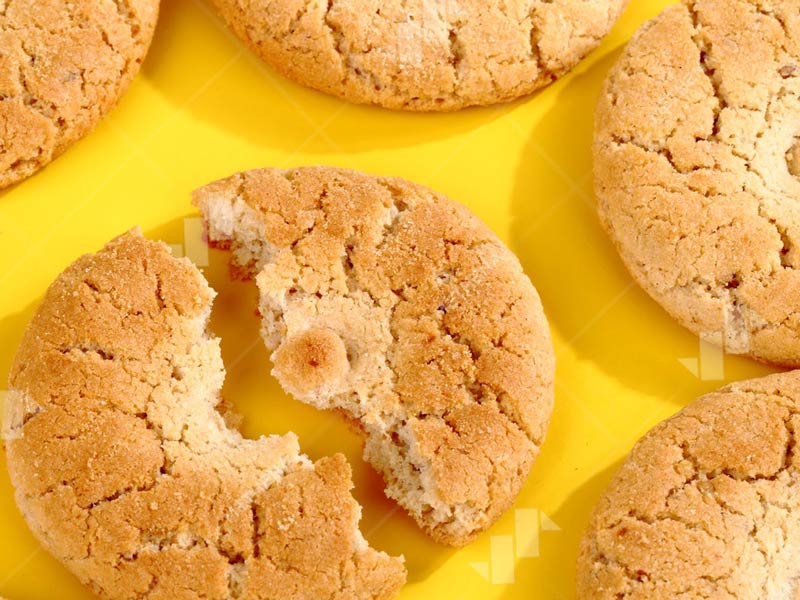
Whether a peach crisp is of high quality depends not only on the recipe and the master's experience but also on whether the process can be executed consistently by the equipment. In large-scale production, the critical stages—high-temperature blooming in the early stage, stable setting in the middle, and thorough dehydration in the late stage—along with the pressure fluctuations managed by chimney adjustments, often suffer from batch-to-batch inconsistency, unstable patterns, uneven coloring, and fluctuating textures if controlled solely by manual experience.
This highlights the vital importance of modern peach crisp biscuit machine. Only by systematically matching temperature zone control, hot air circulation, conveying rhythm, and moisture discharge logic can a "superior process" be truly transformed into a "superior product." For instance, forming equipment must ensure that every peach crisp blank has uniform thickness and appropriate spacing to guarantee even heat distribution once it enters the oven. Meanwhile, the baking equipment must feature multi-stage independent temperature control to provide the precise heat required at each phase. Furthermore, a stable conveying system and flexible exhaust design directly influence the successful blooming, uniform browning, and final crispy texture of the peach crisp.
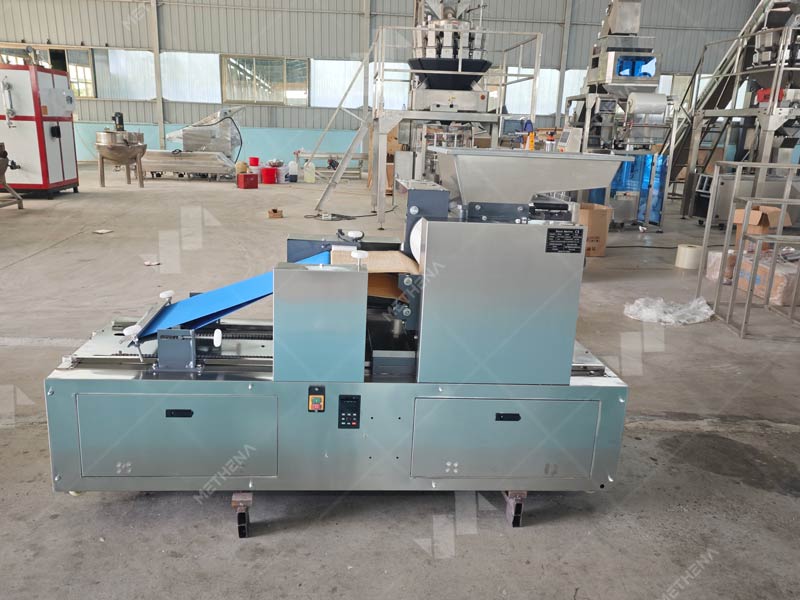
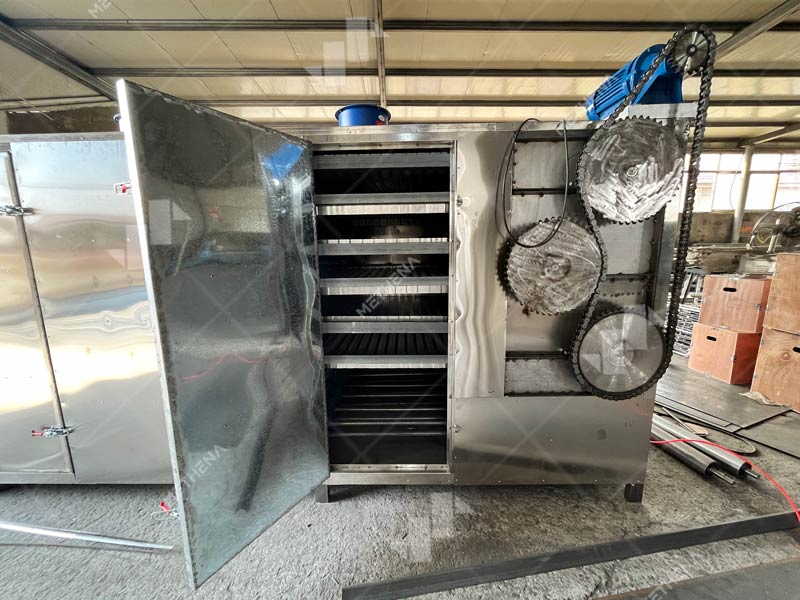
For sugar-free, low-sugar, or other upgraded formulas, the integration of machinery and process is even more critical. Because these products face greater challenges in rising, coloring, and structural integrity, only high-precision equipment control can compensate for the inherent limitations of the ingredients. This ensures an optimal balance between appearance, mouthfeel, and stability. In essence, modern peach crisp production is no longer as simple as "putting dough into an oven"; it is the result of the synchronized interaction between forming, conveying, baking, and moisture management.
High-quality baking processes require high-precision mechanical equipment to match. Even with a perfect temperature zone scheme, if the equipment lacks temperature control accuracy or transmission stability, achieving standardized mass production remains out of reach.
Methena machinery possesses deep insights into every detail of peach crisp processing. Our complete automatic biscuit production line covers the entire process—from dough mixing and shaping to baking and packaging. Equipped with a precise multi-stage independent temperature control system and intelligent transmission logic, it perfectly replicates the professional technique of "high-pressure blooming in the early stage and low-temperature dehydration in the late stage."
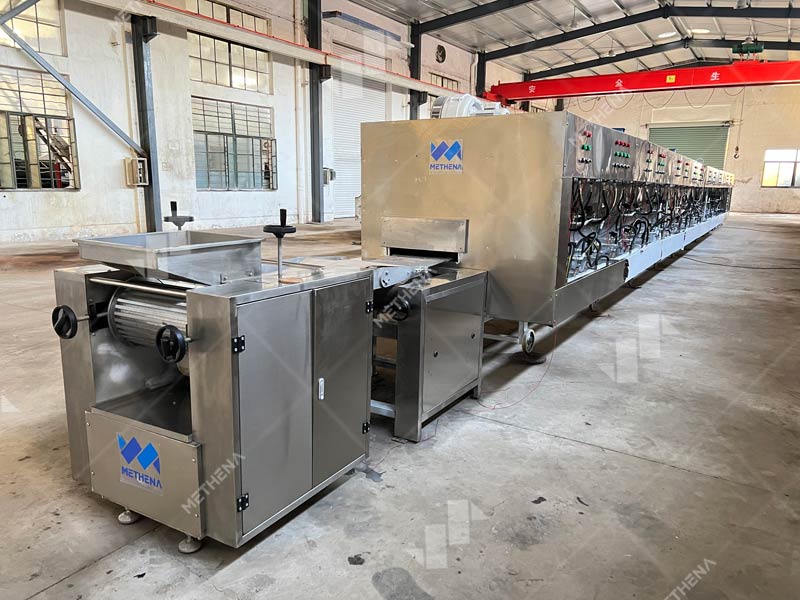
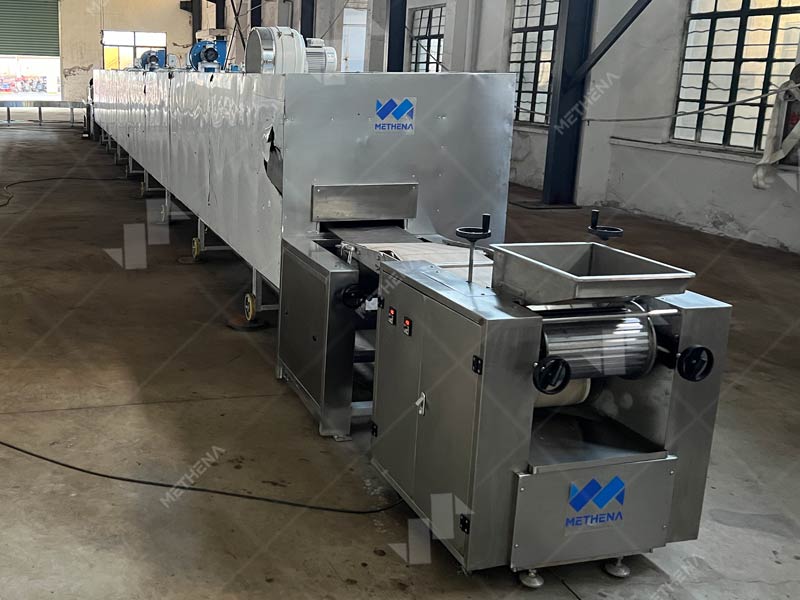
Whether dealing with challenging sugar-free formulas or pursuing high-speed large-scale production, Methena machinery provides stable, high-performance integrated solutions. Choose Methena machinery, and let every peach crisp become a masterpiece of craftsmanship.